




Vaping has become part of everyday life for a growing number of New Zealanders, and at North Shore Oral and Maxillofacial Surgery (NSOMS) we are seeing more implant patients who vape than ever before. For many, it feels like a cleaner, more modern alternative to smoking. But if you are considering dental implants, what you inhale could be quietly working against you.
Dental implants are a significant decision, financially and personally. The last thing anyone wants is to go through the process only to face complications that could have been avoided. This article breaks down what the research says, what the real risks are, and what you can do to protect your investment and your smile.
Why Dental Implants Need Healthy Bone and Blood Flow
Dental implants work by fusing directly with the jawbone through a process called osseointegration. Once the titanium implant is placed by an oral surgeon, the surrounding bone gradually bonds to its surface, creating a stable, permanent foundation for the replacement tooth or teeth.
This process depends on healthy circulation, a functioning immune response, and undisturbed tissue healing. Anything that interferes with blood flow or tissue repair increases the risk of complications.
At NSOMS all of our dental implant options rely on the same fundamental requirement: good bone health and effective healing.
Does Smoking Affect Dental Implant Success Rates?
Absolutely. The research on smoking and dental implants is consistent and significant.
A systematic review of 33 studies involving nearly 30,000 implants found a significant correlation between smoking and increased implant failure rates in 25 of those studies, with evidence of a dose-response relationship where heavier daily smoking substantially increased the risk.
One long-term retrospective study from PubMed found that patients who smoked at the time of implant surgery had a failure rate of 23.08%, compared to an overall failure rate of 7.72% across the full sample.
Those numbers are hard to ignore. Smoking affects the body's ability to heal in several important ways. Nicotine restricts blood flow to the gums and bone, carbon monoxide reduces the oxygen available to healing tissue, and the immune response that normally protects the implant site from infection is weakened. It is a combination that creates real challenges at exactly the moment your body needs to perform.
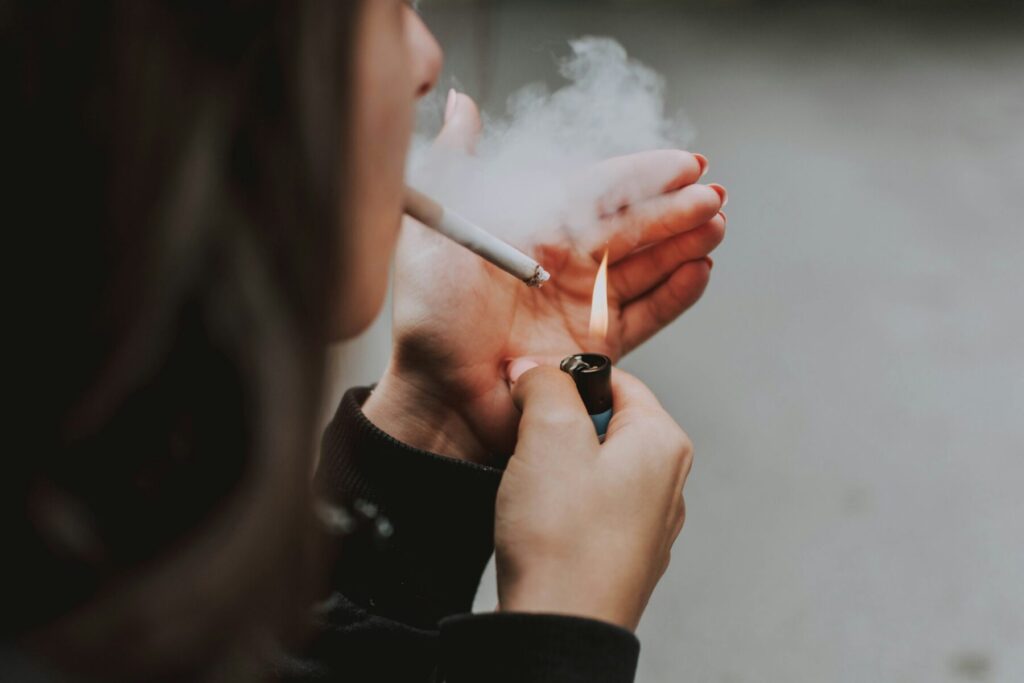
Vaping is where many patients are caught off guard. It feels like the safer option, but the nicotine delivered through a vape device still restricts blood flow and slows healing.
What Complications Can Smoking and Vaping Cause After Dental Implant Surgery?
The most serious is peri-implantitis, an inflammatory condition affecting the gum and bone tissue around the implant. Think of it as the implant equivalent of gum disease. If it takes hold and goes untreated, it can cause progressive bone loss and, in some cases, implant failure. Smokers and vapers are significantly more likely to develop it, and harder to treat when they do.
How Long Before Dental Implant Surgery Should You Stop Smoking?
The general recommendation is to stop at least two weeks before surgery and remain nicotine-free for a minimum of two months afterward. The longer you can abstain, the better your outcomes. Three or more months before surgery allows your tissues and circulation to recover meaningfully before the procedure.
The same applies to vaping. Nicotine is nicotine, regardless of how it is delivered. If you are using nicotine replacement therapy to help you quit, discuss the timing with your oral surgeon before your procedure.
How Can You Improve Your Dental Implant Success if You Smoke or Vape?
The single most effective step is to stop using nicotine before surgery and stay nicotine-free throughout healing. Even a short quit window makes a real difference as blood flow begins to improve within days of stopping. Speak with your GP about nicotine replacement therapy, or visit Quitline NZ for free personalised support. Most importantly, be upfront with your oral surgeon about your smoking or vaping history. Your care plan, monitoring schedule, and healing timeline can all be tailored to give you the best possible chance of success.
Ready to Talk to an Oral Surgeon in Auckland?
If you smoke or vape and are considering dental implants, the best thing you can do is have an honest conversation with one of our oral and maxillofacial surgeons in Auckland before making a decision. Every patient's situation is different. Contact our NSOMS team and visit us at one of our two Auckland clinics, North Shore or Newmarket.